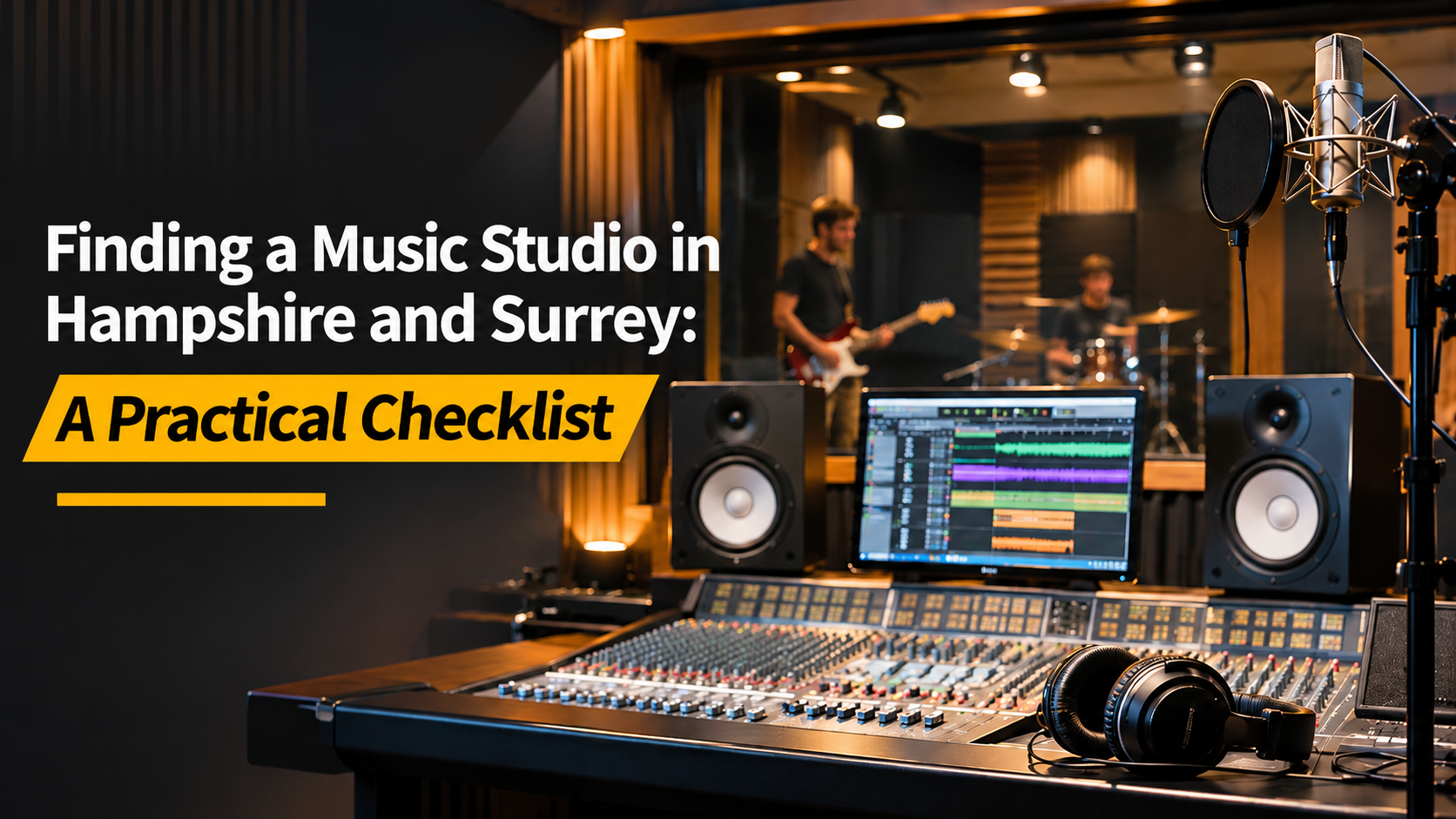
Finding a Music Studio in Hampshire and Surrey: A Practical Checklist
If you have ever tried to find the right music studios in Hampshire and Surrey, you will know how quickly the options pile up. From Winchester and Southampton to Guildford and Farnham, the two counties are full of creative spaces, and the best music studios are often tucked away on industrial estates, in converted barns or above high-street shops. Many people begin with a quick search for music studios near me, but a little background knowledge makes the decision far easier. This guide explains what is available, what to look for and how to book your session with confidence, so your time and budget go towards making music rather than sorting out logistics.
Why Hampshire and Surrey Are Good Places to Record
Both counties have a long-standing musical culture, with busy venues, music colleges, community choirs, jazz nights and a healthy crop of independent bands. Being close to London also means that experienced engineers and producers are within easy reach, yet prices tend to be gentler than those in the capital. For many artists, that balance of quality and value is the main attraction. You also avoid the stress of city travel, expensive parking and cramped loading bays, which matters when you are carrying guitars, a drum kit or a keyboard.
Understanding the Different Types of Studio
Not every space is built for the same job, and knowing the difference will save you from booking the wrong room.
A music recording studio is designed for capturing performances. It usually has a control room, a separate live room and a good selection of microphones, preamps and monitors. If you are working on an EP, a demo or a full album, this is the kind of space you need. Many also provide an in-house engineer, which is a real advantage if you are new to the process.
A sound studio tends to focus on spoken word and post-production work. Voiceovers, podcasts, audiobooks and audio for video are often handled here. The rooms are typically smaller and very well treated, because clean, dry audio matters more than a lively room sound.
Rehearsal rooms are a more affordable option for bands who simply need to practise together, while production suites suit solo artists and producers who work mainly with software, synths and samples. Plenty of local studios combine several of these under one roof, so it is worth asking what a particular venue does best.
Music Studios in Hampshire
Hampshire offers a nicely varied mix. Southampton and Portsmouth have a lively, band-driven scene, and you will find rehearsal spaces and affordable recording rooms catering to rock, indie, hip-hop and electronic acts. Winchester leans towards acoustic, classical and singer-songwriter work, with quieter rooms and a more relaxed atmosphere. Further north, towns such as Basingstoke and Andover have practical, well-equipped studios with easy parking and good road links, which suits touring musicians and larger groups.
Music Studios in Surrey
Surrey tends to attract working professionals and established artists, partly because of its closeness to London. Guildford, Woking, Farnham and Epsom all have a good reputation for polished, professionally run spaces, and some of the larger rooms can handle live band tracking with full drum kits. In more rural pockets, such as around Godalming and Dorking, you can find residential-style set-ups where you can switch off from everyday distractions and concentrate on the work. Always check each studio's own website for current details, as facilities and pricing change from time to time.
What to Look For Before You Book
Price matters, but it should not be your only measure. These points will help you compare properly:
- Equipment and room quality: Ask which microphones, interfaces and monitors are available, and whether the room has been acoustically treated.
- Engineer or producer: Find out whether one is included, and listen to examples of their previous work.
- Genre experience: A studio that regularly records metal may handle a string quartet differently from one used to folk or jazz.
- Location and access: Think about parking, loading, nearby food and public transport.
- Flexibility: Some studios offer half-day, full-day or block bookings, which can bring the hourly rate down.
How to Book Step by Step
Booking is usually straightforward once you know what you want.
- Define your project. Decide whether you need tracking, mixing, mastering, rehearsal time or voice work, and roughly how many hours you will require.
- Shortlist two or three studios. Search for recording studios near me and then narrow the results by reading reviews, browsing photos and listening to sample recordings.
- Get in touch. Send a short message explaining your genre, line-up and timeline. A reply that is friendly and specific is a good sign.
- Arrange a visit or call. Seeing the room, even briefly, tells you more than any brochure. If that is not possible, ask for a video walkthrough.
- Confirm costs in writing. Check what is included, such as engineer time, instrument hire, mixing and file delivery, as well as the deposit and cancellation terms.
- Prepare before the day. Rehearse your parts, change your guitar strings, bring spare cables and backups of any backing tracks.
A Few Practical Tips on Cost
Hourly rates across the two counties vary widely depending on the engineer, the equipment and the day of the week. Rehearsal rooms are usually the cheapest, while a fully staffed recording studio with high-end gear sits at the upper end. Weekday daytime slots are often discounted, so if your schedule allows, it is worth asking. Be wary of anything that looks unusually cheap, as it may mean limited equipment or a very basic room. And always leave a little extra time in your booking, because sessions almost always take longer than expected.
Final Thoughts
Choosing between the many music studios across Hampshire and Surrey does not need to be stressful. Start by working out what kind of space your project calls for, whether that is a music recording studio for a full band or a quiet sound studio for a podcast, and then compare a few options carefully. Searching for music studios near me is a perfectly good starting point, but a short conversation with the studio and a quick visit will tell you far more than a listing ever could. Take your time, ask plenty of questions and pick a space where you feel comfortable, because that comfort tends to show in the finished recording.
Frequently Asked Questions
How far in advance should I book a studio session?
For weekday slots, one to two weeks is usually enough. Weekends and popular evening times fill up faster, so it is wise to book three to four weeks ahead, especially if you need a particular engineer.
Do I need to bring my own equipment?
It depends on the studio. Most provide microphones, monitors and a basic backline, but you will normally want to bring your own instruments, cables, sticks and strings. Ask what is included when you enquire so there are no surprises on the day.
Can I bring a producer or engineer of my own?
In most cases, yes. Some studios are happy for outside engineers to use the space, while others prefer to supply their own. Mention it at the start so the studio can confirm the arrangement and any extra fees.
How long does it take to record a single song?
A well-rehearsed band can often track a song in three to four hours, with mixing as a separate stage. Solo vocal or acoustic recordings can be quicker. As a rule of thumb, allow more time than you think you need.
Will I receive the files after the session?
Usually you will be sent the raw tracks, a rough mix or a finished master, depending on the package you booked. Confirm the file format and delivery method beforehand, and check whether storage or transfer costs apply.
What happens if I need to cancel or reschedule?
Policies differ, but many studios ask for 48 hours' notice and may keep part of the deposit for late changes. Read the terms before paying so you know where you stand.